Most buyers start supplier research with the question 'which factory is the biggest?' Big is not the same as best, and in pet products it is not even the same as cheapest. A large factory quotes the capacity it has, not the lowest price you can get — and a mid-size factory can quote a sharper price precisely because your order fills its month. Which supplier type fits your program is decided by two numbers you already know: how much you order per model, and how many categories have to travel in one container. Everything else — vetting, verification, negotiation — comes after those two.
The matching question comes first
Supplier type is a match, not a ranking. The supplier that is perfect for a 5,000-piece single-model program is the wrong supplier for a 600-piece mixed-category container, and the other way around. Before comparing quotes, fix your own two numbers: order size per model, and category count per container. The type follows from those numbers — and once the type is right, the trade-offs inside it become predictable.
Large factories: capacity is the product
Large factories are built for scale: multi-line scheduling, in-house engineering, documented systems, audits on file, and the balance sheet to absorb a big program without drama. For stable, repeatable orders at large volume in one category they are hard to beat — the capacity is real, and the systems show up in every document they send.
The trade-offs sit on your side of the table. MOQ floors are set for their scheduling efficiency, not your test budget; production dates follow their line plan, not your launch; and small orders are quoted last and cared for least. The price is not automatically the lowest either — heavy overhead and order cherry-picking give a large factory little reason to compete hard on price for a mid-size buyer, so its unit price can land above a mid-size factory's for the same specification.
Small and mid-size factories: price and attention
A small or mid-size factory is fighting for volume, and it shows in the quote: better price competitiveness on the same spec, MOQs that start near 300 pieces, and direct access to the owner or the engineer who will actually run your product. Iteration is faster too — a fabric change that becomes a committee decision at a large factory can be a one-line email here.
The limits are structural. One factory only runs the categories its lines support — nobody sews good beds, ramps, crates and tents under one roof — so a multi-category program ends up as three or four factories, three or four document sets and three or four QC workflows. System depth also varies factory to factory: certifications, documentation discipline and inspection gates differ.
Sourcing partners: one PO across categories
A sourcing partner buys the different categories you need, consolidates them into one container and hands back one PO, one QC workflow and one document set. That is the product: you stop being the project manager of several factories, and accountability for the whole container sits with one entity.
How to match your program
- Single category, large volume — several thousand pieces per model, repeatable: a large factory is usually the right home; budget for their MOQ floor and their schedule.
- Single category, small to mid orders — a few hundred to roughly 1,500 pieces per model: a small or mid-size factory usually quotes sharper and answers faster; you pay in systems depth.
- Several categories, one container: a sourcing partner consolidates the PO and the QC workflow into one point of accountability.
Two rules follow. Volume and category breadth decide the type — website polish and certificate walls do not. And if your volume is still moving, start with the type whose MOQ fits today's order and re-quote at scale: switching suppliers later is cheaper than sitting on a warehouse.
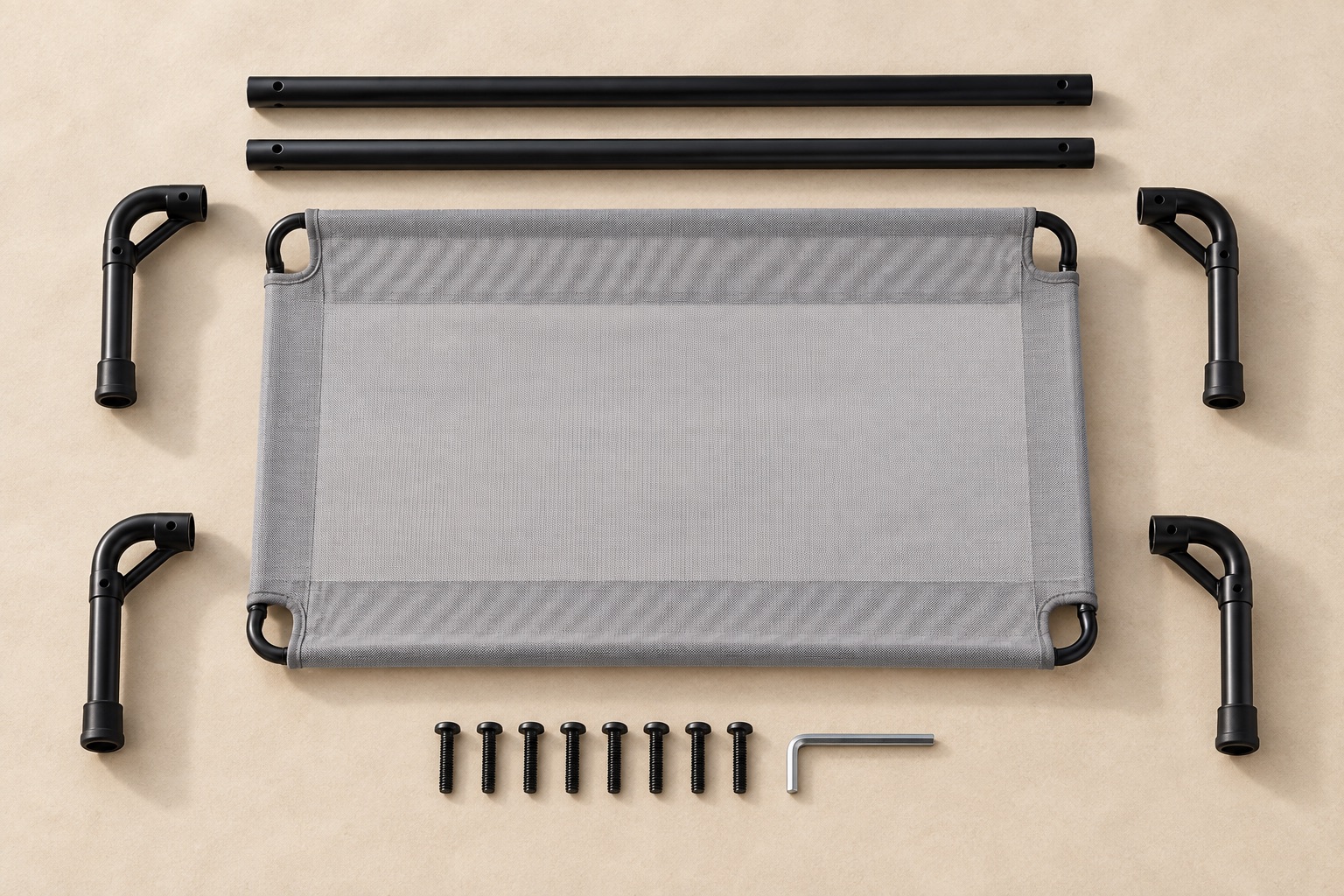
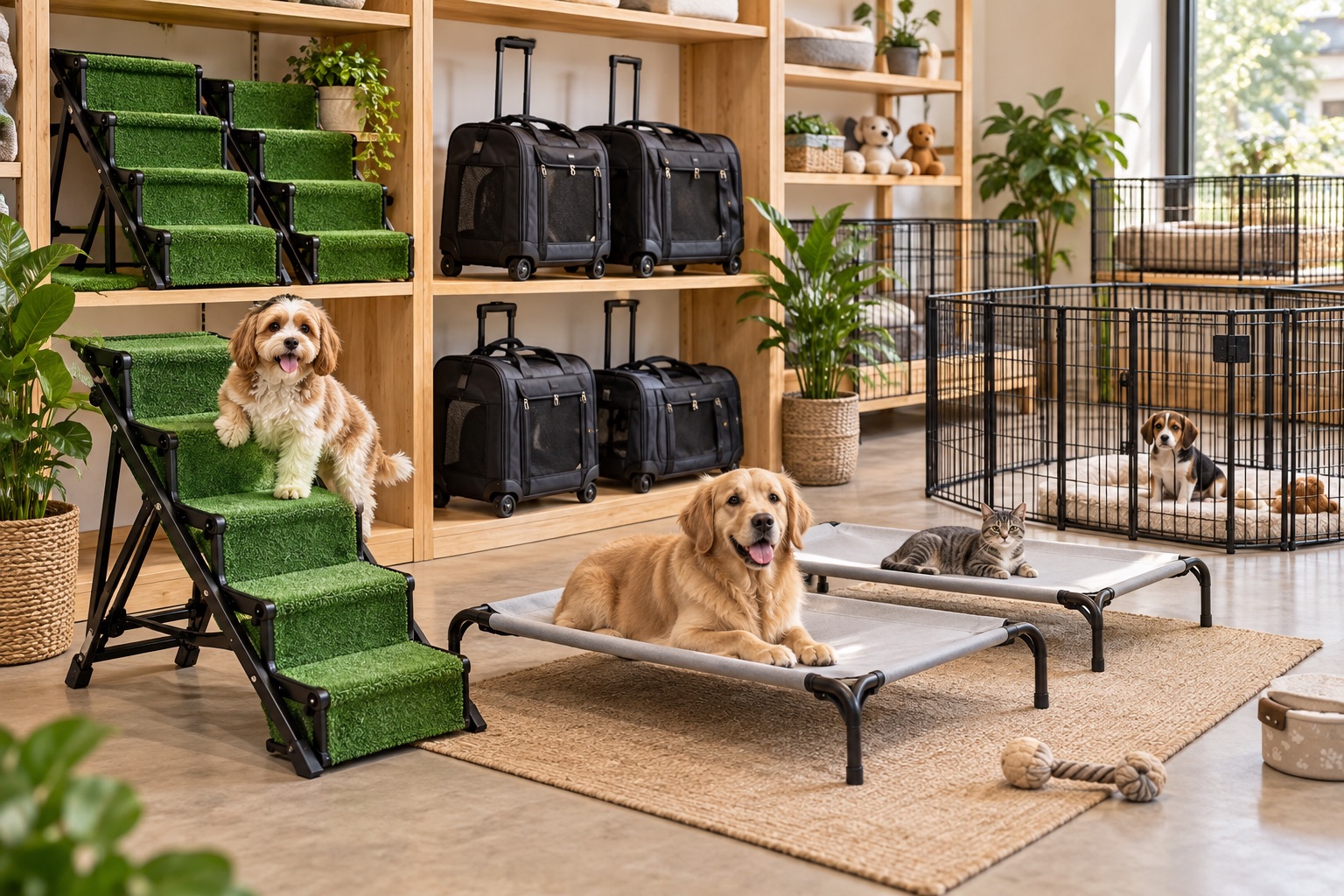
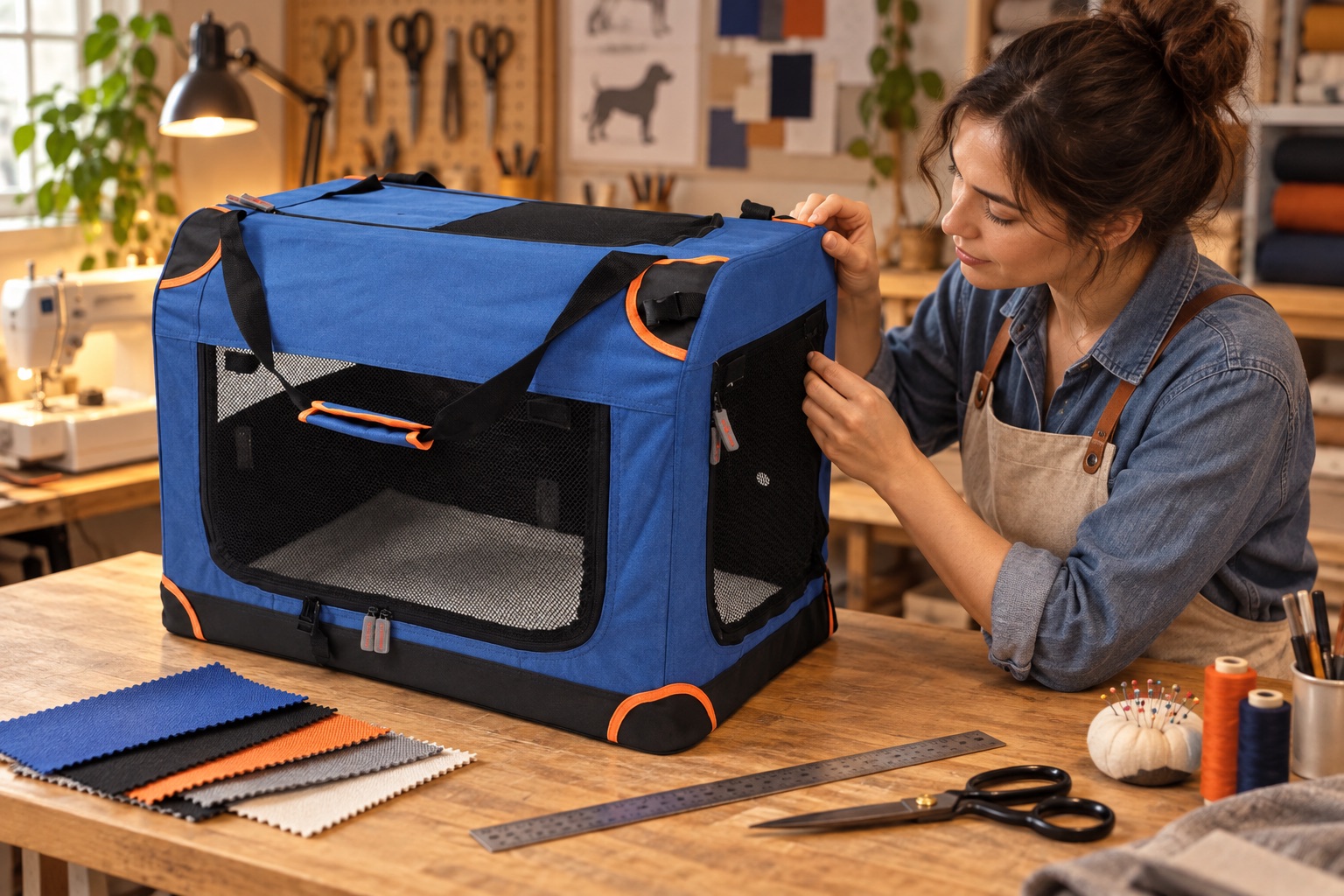
Where we fit: a 63-model catalogue across four product families — elevated beds, ramps and stairs, crates and playpens, tents and carriers — built through a BSCI- and ISO-aligned factory network, OEM and ODM for partners in more than 50 countries, MOQ of 300 pcs per model, 30-45 day production lead times, 7-10 day sampling, T/T 30/70, FOB Shanghai. Our fit is mid-size and multi-model programs where one PO covers several models and one QC workflow covers the container. If your program is a single category at very large volume, a large factory will usually serve you better — we will say so on the first call.