Diversification away from single-country sourcing is a legitimate strategy — and 'China cost is rising' is a real signal. But country comparisons in pet products often compare fantasies: China at its worst against Vietnam at its best. This article compares the three destinations on the dimensions that actually drive pet product programs: category depth, MOQ, lead time, customization and compliance support.
China: category depth and speed
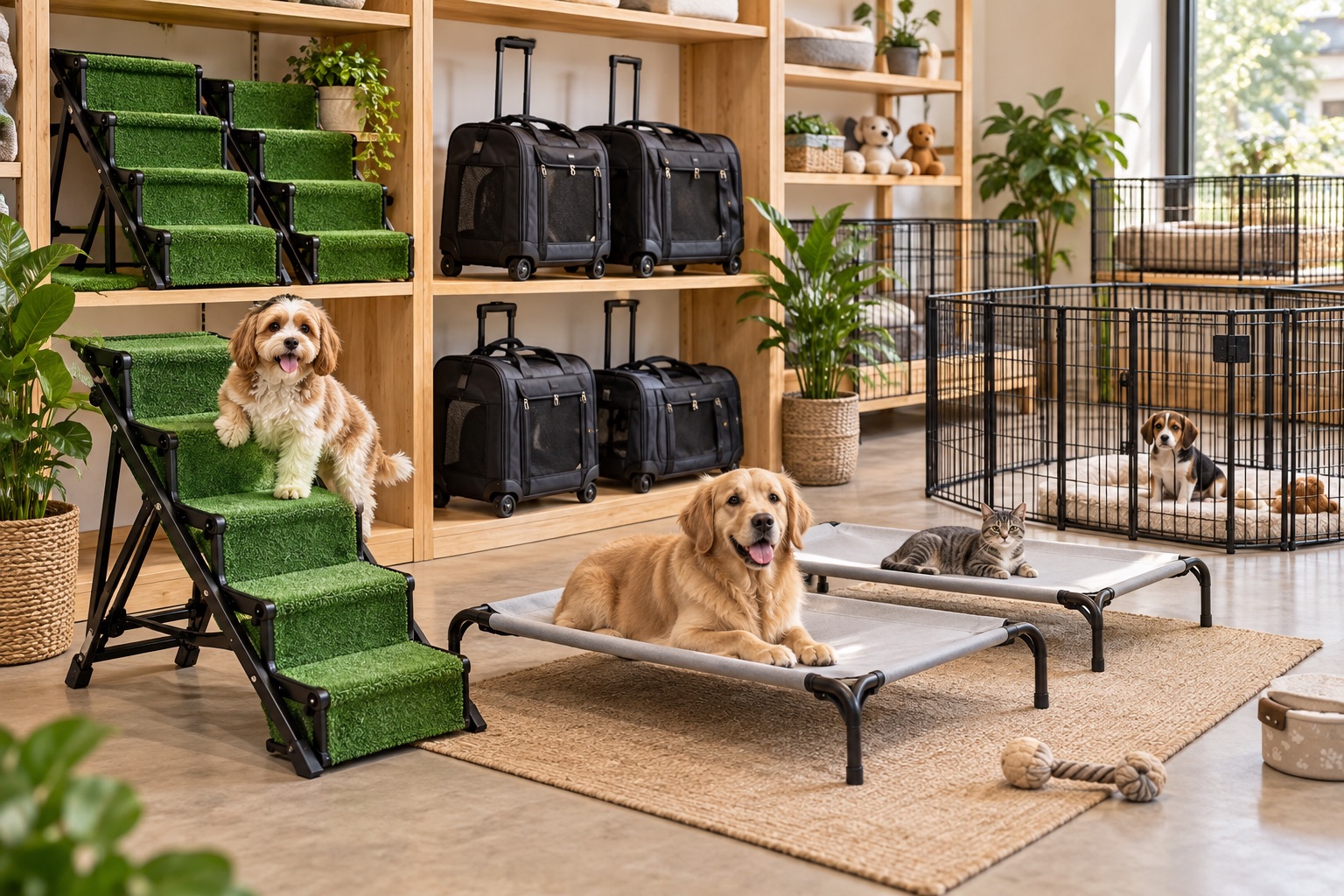
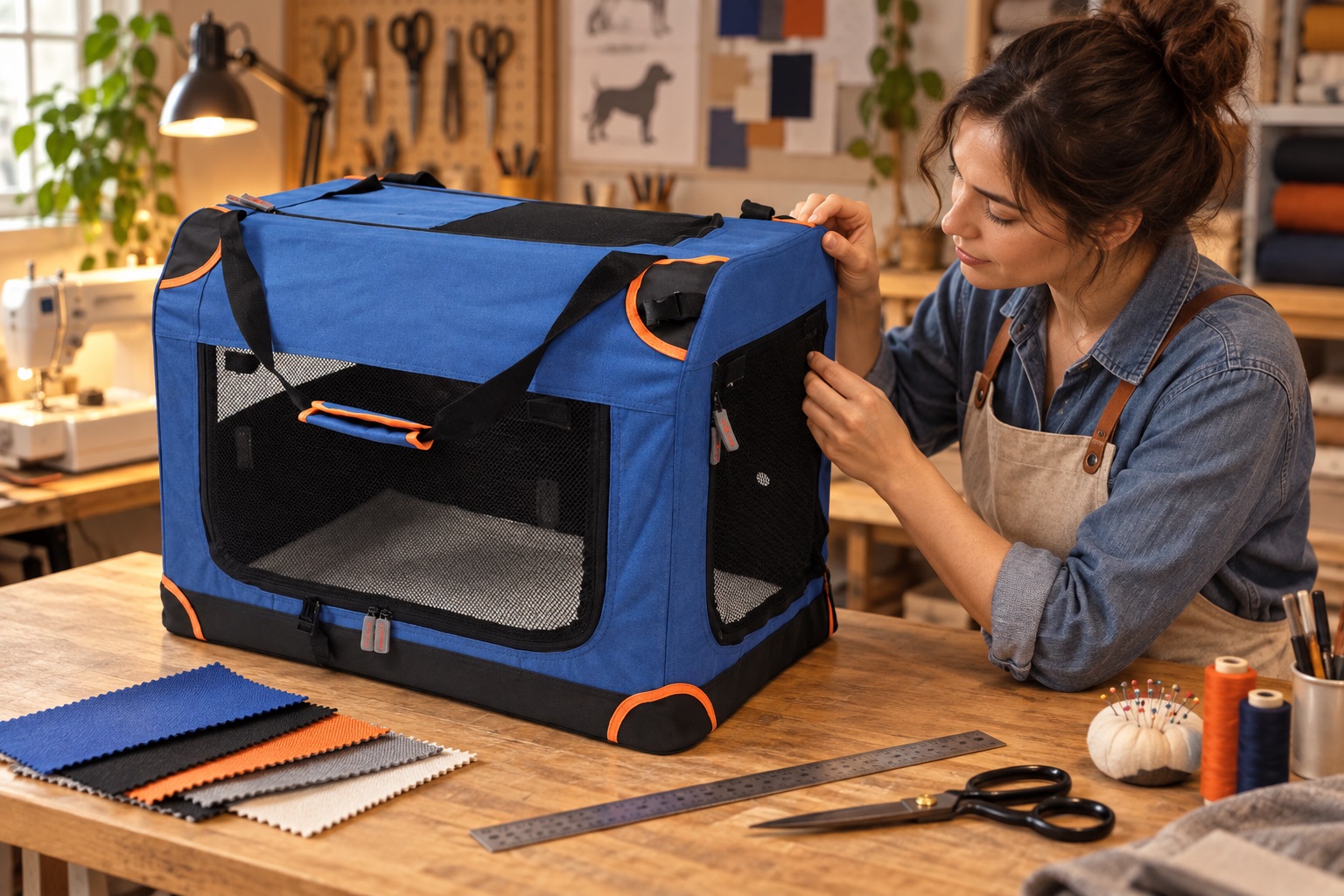
China's structural advantage in pet products is the supply chain behind the product. Textilene and oxford weaves, powder-coated tube bending, webbing, buckles, zippers and retail packaging all sit within a few hours of the manufacturing clusters — which is why a full catalogue like ours can span elevated beds, ramps and stairs, crates, and outdoor tents under one QC workflow. When your program needs a custom Pantone fabric, a new frame gauge, or FBA-ready packaging at 300-piece MOQ, Chinese factories quote it in days because the inputs are local.
Lead times follow the same logic: our 7-10 day samples and 30-45 day production window depend on material availability within the cluster. For mixed-SKU first orders — beds plus stairs plus crates in one container — consolidation is trivial when everything is made within one region. This is documented in our China supplier overview, and it remains the benchmark the other destinations are measured against.
Vietnam: strong on specific categories, thinner on pet
Vietnam has built genuine strength in soft goods and outdoor gear, and for certain pet textile programs it can be competitive — particularly where tariff position on your lane matters more than product depth. The constraint is the supporting cast: technical fabrics, hardware and packaging often import from China, which adds lead time and blurs the cost gap on customized work. For pet categories specifically — load-rated ramps, wire-frame crates, sized cot ladders — the deep factory base is still in China, and Vietnamese alternatives tend to concentrate in simpler sewn goods.
India: volume textiles, early-stage pet category
India's textile and metal-fabrication industries are formidable, and its pet product export base is growing fast. Today, though, the pet category remains early-stage: fewer factories offer the full S-XL cot ladders or 70 kg-rated stair programs that Chinese catalogues publish as standard, and MOQs on customized runs skew higher where component ecosystems are thinner. For high-volume standard-spec textile goods, India can price aggressively; for a differentiated, private-label pet range with tight sample discipline, the supplier pool is narrower.
The five questions that decide it for your program
- Category depth: can the country supply your full size ladder at published specs, or only the simple SKUs?
- Component distance: are fabrics, frames and hardware local (days) or imported (weeks)?
- Customization MOQ: what is the realistic minimum for your Pantone and packaging program?
- Sample speed: how long from brief to physical pre-production sample?
- Compliance support: can the factory produce REACH / Prop 65 relevant documentation and welcome your QC agent?
Score the three destinations against those five and the choice usually makes itself for your specific mix. High-volume standard pet textiles with simple specs open the door to Vietnam or India; a private label range spanning families — cots, stairs, crates, outdoor — still runs fastest out of the Chinese clusters, and dual-country strategies work best when they split by category rather than by fantasy of replacement.
What diversification actually looks like in practice
Importers who successfully run multi-country programs rarely split by supplier-quality fantasy; they split by SKU economics. The pattern we see from the inside: standard-spec textile goods with simple sewing flow move first; engineered, load-rated or customization-heavy SKUs stay in the Chinese clusters where component ecosystems make custom work a quotation rather than a project. A mixed program — say, textilene cots plus a 70 kg aluminum stair line — often prices out with each family in its natural home, and the container consolidates either way.
The hidden variable is sample-and-reorder velocity. First programs live or die on the second order: how fast a winning SKU can be reordered, restyled for a new season, or extended with a new size. That velocity tracks component distance more than labor cost — which is why the cluster advantage compounds over a relationship rather than showing up on the first quotation. When you benchmark destinations, benchmark the reorder timeline, not just the first quote.
Vet the supplier, not the country
The country sets the ceiling — component distance, freight lanes, sample velocity — but the supplier sets the floor. A disciplined factory in the wrong country will still publish load ratings, packed dimensions and a dated production plan; a sloppy one inside the best cluster will still hide all three. So run the same vetting sequence everywhere: a written spec sheet, a pre-production sample from mass-production materials, three-gate inspection, and a quotation that states MOQ, lead time and trade term on every line. Compare countries only on the SKUs that survive that vetting — that ordering is what keeps a diversification strategy from turning into an expensive experiment.