Quality control fails at the acceptance criteria, not at the inspection. Most buyers write 'good quality' into a purchase order, which is unenforceable. This article gives you testable criteria per product family in the pet category — copy them into your PO and every factory conversation changes immediately, because now quality has numbers.
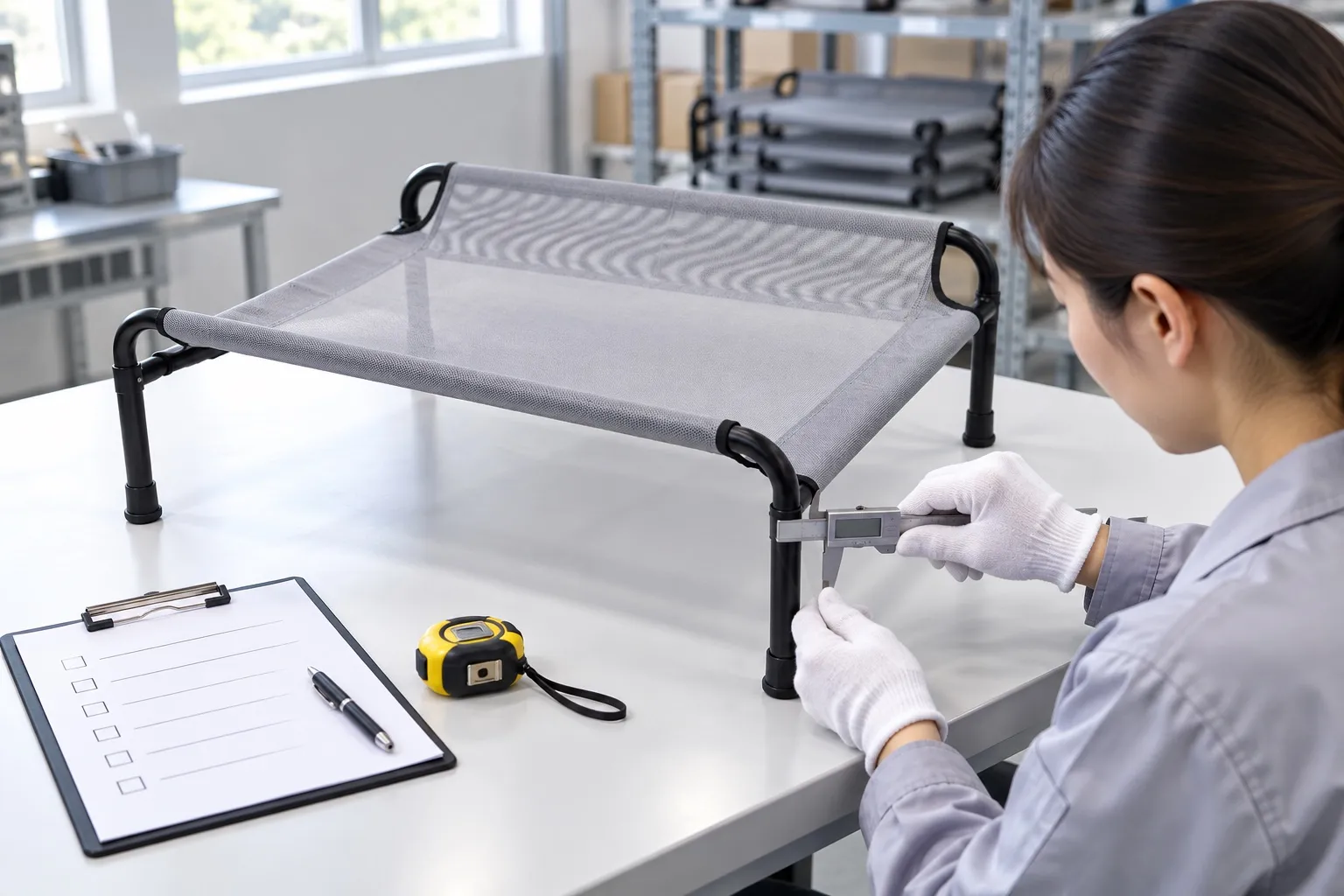
Elevated beds and cots: structure first
- Static load test: load the center of the bed with 2× its rated capacity for 24 hours. Acceptance: no frame deformation, no fabric tearing or seam failure, legs still square.
- Corner joint check: torque-test each leg joint; wobble beyond a few degrees after load means a weak connector that will fail in the field.
- Fabric: confirm denier and coating in writing (e.g. 600D PVC Oxford or 1×1 Textilene) and check against the golden sample by weight per square meter.
- Height stability: measure leg height at all four corners before and after load; more than 5mm variance indicates bending.
A useful reference point: our elevated cot range covers load ratings from roughly 15 kg up to 80 kg depending on size and frame material, and the acceptance logic above is exactly how such ratings are verified rather than invented.
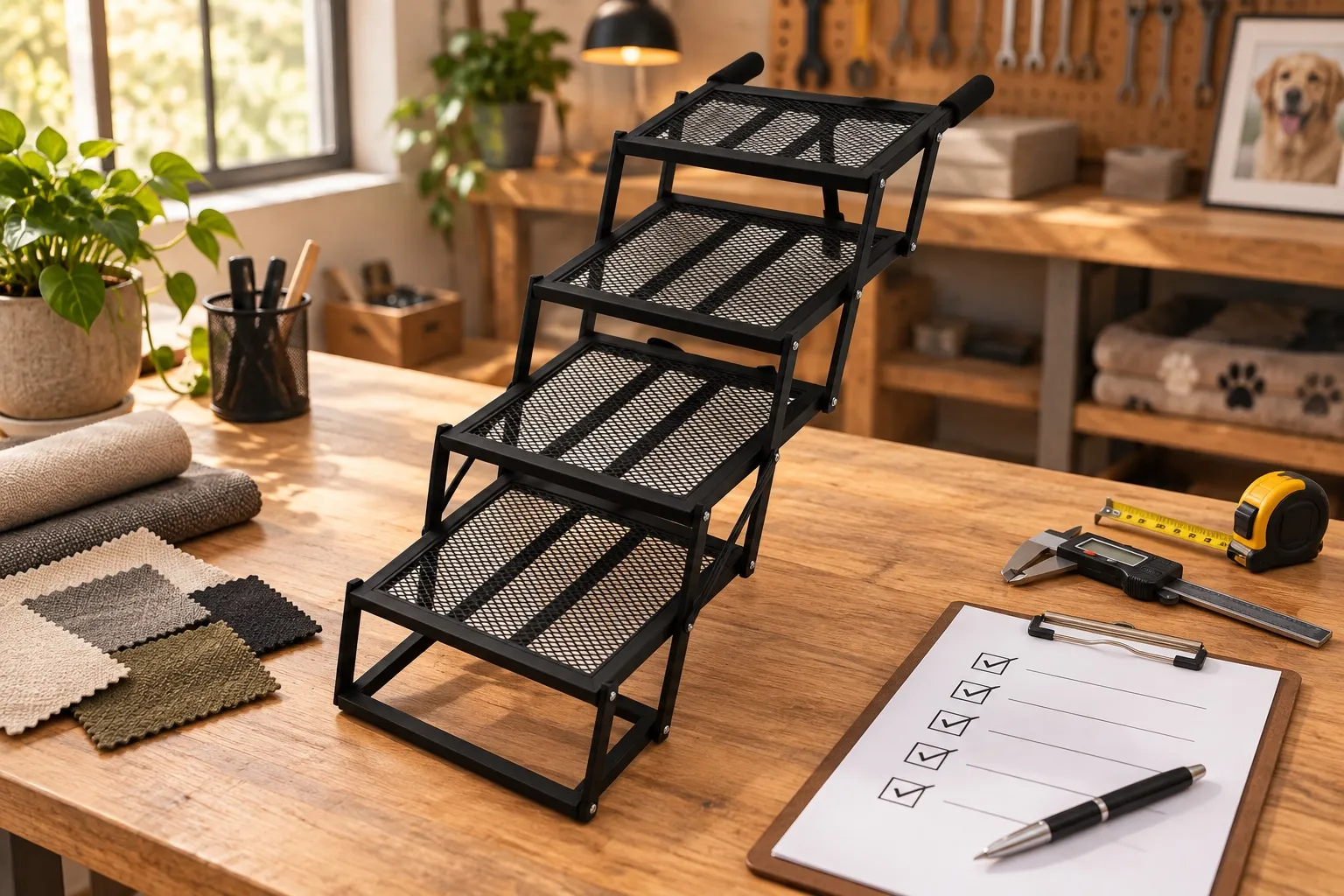
Ramps and stairs: the failure surface is grip
- Load test at mid-span: ramps fail in the middle, not at the ends. Load 1.5× rated capacity at the midpoint; acceptance is no permanent bend.
- Surface slip: run a dry paw-equivalent test (rubber pad) on the walking surface at the maximum incline angle; the surface must resist sliding under downward pressure.
- Hinge cycle test: fold and unfold 50 cycles; hinges must show no cracking and lock positively at full extension.
- Edge finishing: all edges rounded or capped — pet paws find sharp edges before owners do, and reviews will find them before that.
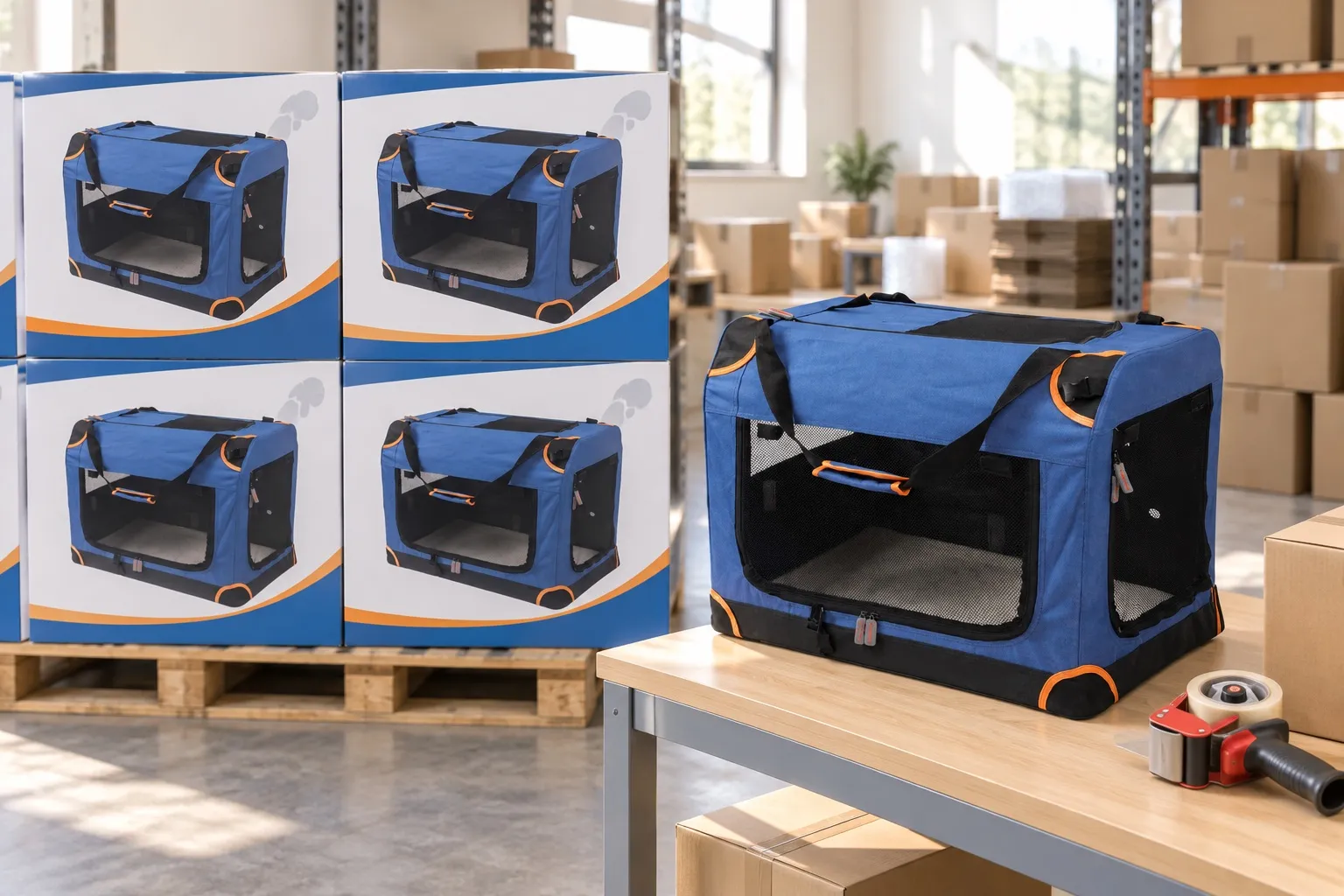
Soft crates: stitching and zippers carry the load
- Stitch density: minimum 5-7 stitches per centimeter on load seams; straight, no skipped stitches, bartacks at every stress point.
- Zipper cycle: 100 open/close cycles with the zipper under light tension; runners must stay attached and teeth must not separate.
- Frame fatigue: fold, pack, unfold 20 cycles — the frame should assemble identically on the twentieth attempt.
- Mesh integrity: 1×1 Textilene or equivalent, no runs, firmly bonded on all edges (a mesh panel that detaches at one corner will fail in transit).
Tents and canopy products: weather is the test
- Canopy fabric: 190T taffeta or better with a stated waterproof coating; check seam taping or sealed seams on the roof panel.
- Pole test: fiberglass poles flexed to insertion angle 30 times; no whitening (fiber cracking) at the bend.
- Assembly time: a new user should assemble within the time stated on your packaging — time it with three different people.
- Wind behavior: stake points reinforced; guying points tested with a pull of 15kg without fabric tearing at the attachment.
Universal checks across all pet products
- Chemical compliance: materials should meet REACH for the EU and CA Prop 65 for California; reports should be traceable to material batches, not just product families.
- Odor check: strong chemical smell out of the box is a returns generator; aired products should be neutral within 48 hours.
- Packaging drop: packed cartons dropped on one corner, one edge and one face from 80cm; contents must survive with only cosmetic packaging damage.
- Label accuracy: barcode scan test on every carton; wrong GS1 labels are the most expensive trivial mistake in retail.
- AQL sampling: for bulk orders, inspect per AQL 2.5 major / 4.0 minor rather than inspecting everything or nothing.
- Pre-shipment photo report: packed cartons, barcode labels and a sample of finished goods photographed and archived before the balance payment moves — the evidence your payment trigger and any later claim will lean on.
How to make factories care
Attach this checklist to your purchase order and reference it in the inspection stage: acceptance criteria in the PO become the definition of 'defect' during inspection, which is what makes the balance-payment moment objective. Factories with real QC systems — incoming material checks, in-process inspection and pre-shipment inspection — will welcome the clarity; their processes already produce these records. Factories that push back are describing their own capability.
Quality standards are also a positioning tool: the same cot that is 'a cheap bed' becomes 'a load-tested, compliance-ready cot' the moment criteria are documented — and that difference is exactly what retail buyers and marketplaces reward. To see how we document specifications per model, browse the tent and crate lines where packing data and ratings are published on-page.