First orders fail in one of two directions: too small to prove anything, or so ambitious that half the cash sits in slow SKUs for a year. The cure is planning the container as a portfolio — sized on packed volume, mixed on logic, and timed against the reorder you have not placed yet. Here is how to run that plan on a pet products program.
Size the container from packed volume, not ambition
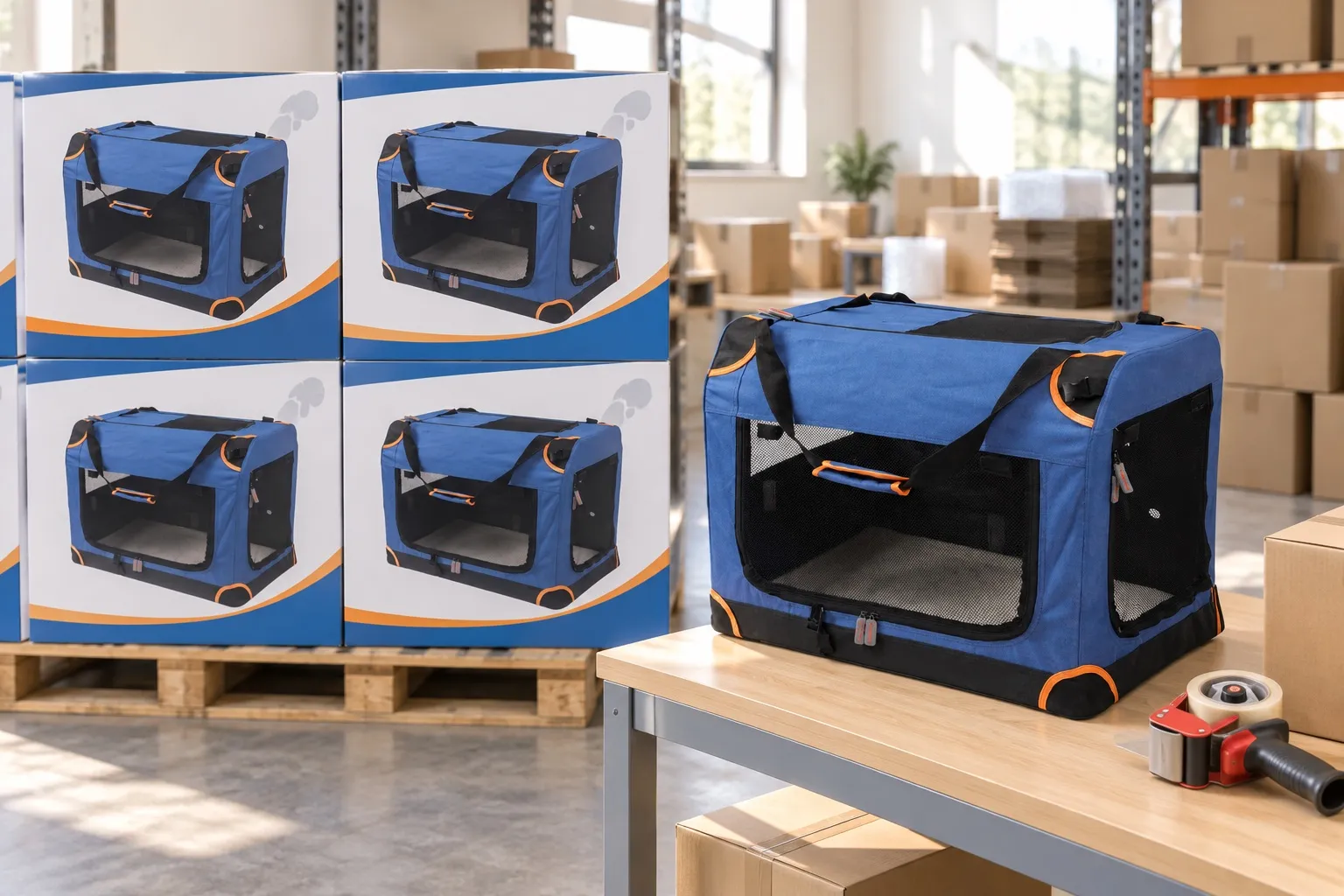
Pet products are kind to first orders because the core families fold flat. Elevated cots pack to a few cbm per 300-piece run; soft crates stack to under 15 cm folded; pet stairs nest into slim cartons. A 20-foot container (about 28 cbm usable) or a shared LCL space covers a serious first program, and a 40-foot high-cube only makes sense once reorder data exists. The planning input is each model's packed dimensions — published on our product pages precisely for this arithmetic, as the landed-cost guide's calculation shows. Rule of thumb: budget container space at 85% and keep 15% for the dunnage, the weird carton and the mistake you have not made yet.
Mix SKUs by role, not by enthusiasm
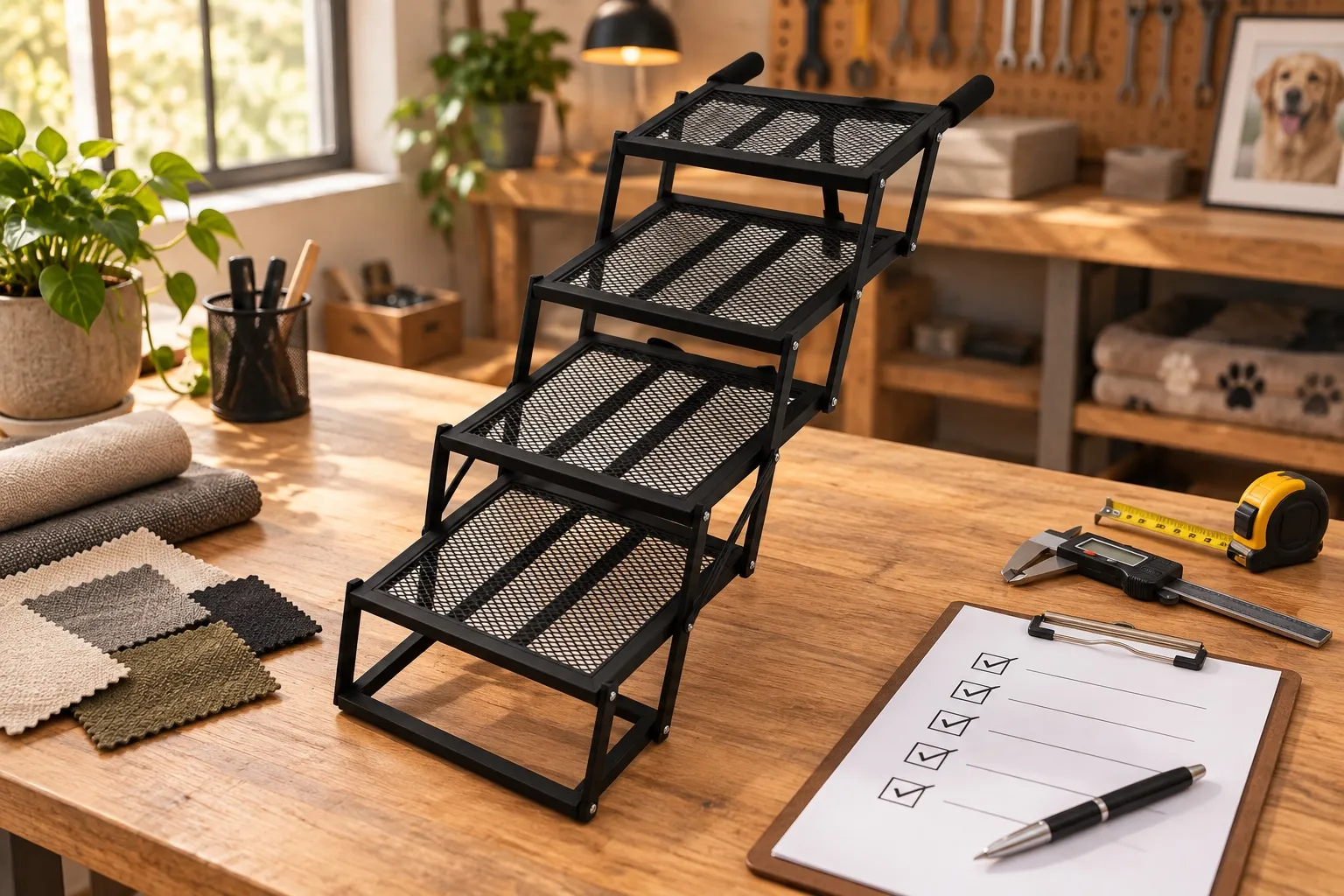
A mixed-SKU container needs roles, not a catalogue. Traffic anchor: one or two volume models at standard spec — a mesh elevated cot or a four-step pet stair — that price competitively and move consistently. Margin carrier: one premium unit — a canopy cot or a lamb-fleece crate — that earns the highest margin per unit. Seasonal option: one outdoor SKU such as a pop-up pet tent if your launch window supports it, otherwise skip the season. Trial slot: one model you believe in but cannot yet prove — a small quantity you can drop if it does not sell. Four roles, six to eight SKUs total, every SKU at a 300-piece MOQ, one brand layer across the lot. That is a first program a reorder can build on.
Loading order matters more than buyers expect: heavy cartons low, fragile surfaces protected, and — for mixed programs — a packing list mapped to carton numbers so your receiving team knows exactly which carton holds what. Our loading plan is issued before deposit precisely so the mix is agreed on paper: which models, which quantities, which carton sequence, which pallet pattern.
Time the reorder before the first container lands
The reorder clock starts at sample approval, not at the sales report. Production runs 30-45 days after approval, plus freight weeks on your lane — so the second order must be decided while the first is selling, using leading indicators: which sizes move first (L cots usually lead), which model generates repeat-purchase language, which seasonal SKU is earning its slot. Buyers who wait for 'sell-through confirmation' before triggering production buy their momentum a forced pause of two months; the reorder guide in our MOQ and lead times page shows the calendar math.
A worked container sketch
Make the portfolio concrete. A 20-foot program for a general pet retailer: 300 mesh elevated cots in M plus 300 in L (the volume spine, roughly 7 cbm folded), 300 four-step pet stairs (about 5 cbm nested), 300 soft crates in M with 150 in S as the trial slot (about 6 cbm stacked flat), one canopy cot capsule of 300 for margin (about 6 cbm with boxes), and a 300-piece playpen for the puppy moment (about 5 cbm). Total near 29 cbm of the 28-33 cbm a 20-foot container realistically takes — tight, which is the point: shared LCL for the overflow beats paying 40-foot freight for air.
Every number in that sketch comes from the same three inputs a factory quotation gives you: unit price, packed dimensions, carton quantity. When a supplier provides those three per model without being asked — as our catalogue pages and quotation sheets do — the container sketch is a spreadsheet exercise, not a negotiation. When a supplier cannot, expect to measure the cartons yourself — and budget the container around your own math.
Run the container like a portfolio
A portfolio, not a wish list, is what separates first orders that fund a second from first orders that fund a storage bill. Give every SKU a role, cap the cash per role, load the cartons against a written packing plan, and let leading indicators — not sell-through reports — trigger the reorder. None of it requires software beyond a spreadsheet; it requires the three numbers every serious quotation already carries: unit price, packed dimensions and carton quantity. Build the sheet once for your first container and it becomes the standing template for every one after it.