تفشل مراقبة الجودة عند معايير القبول، لا عند الفحص. يكتب معظم المشترين «جودة جيدة» في أمر الشراء، وهو أمر غير قابل للإنفاذ. يمنحك هذا المقال معايير قابلة للاختبار لكل عائلة منتجات في فئة الحيوانات الأليفة — انسخها في أمر الشراء (PO) وسيتغير كل حديث مع المصنع فوراً، لأن الجودة أصبحت تملك أرقاماً الآن.
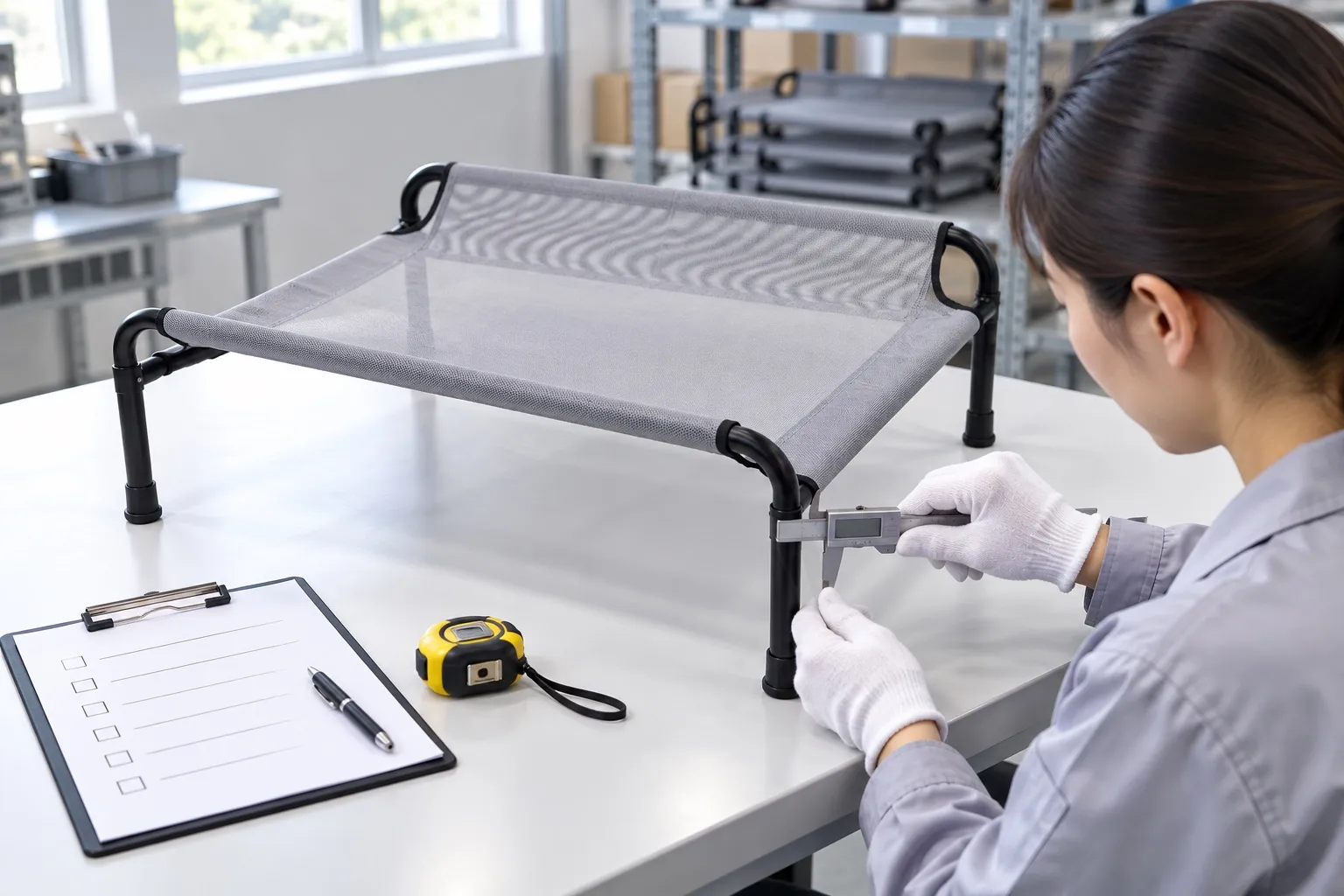
الأسرة والأسرة المرتفعة: الهيكل أولاً
- اختبار حمل ثابت: حمّل مركز السرير بـ 2× سعته المُصنّفة لمدة 24 ساعة. القبول: لا تشوه في الهيكل، لا تمزق في النسيج أو فشل في التماس، وأرجل لا تزال مربعة.
- فحص مفصل الزاوية: اختبر عزم الدوران لكل مفصل رجل؛ التمايل أكثر من بضعة درجات بعد الحمل يعني وصلة ضعيفة ستخفق في الميدان.
- النسيج: أكّد الدنير والطلاء كتابةً (مثلاً 600D PVC Oxford أو 1×1 Textilene) وتحقق مقابل العينة الذهبية بالوزن لكل متر مربع.
- ثبات الارتفاع: قِس ارتفاع الرجل في الزوايا الأربع قبل وبعد الحمل؛ تباين أكثر من 5mm يشير إلى انحناء.
نقطة مرجعية مفيدة: تغطي تشكيلة الأسرة المرتفعة لدينا تصنيفات حمل من حوالي 15 kg وحتى 80 kg حسب المقاس ومادة الهيكل، ومنطق القبول أعلاه هو تماماً كيفية التحقق من هذه التصنيفات بدلاً من اختلاقها.
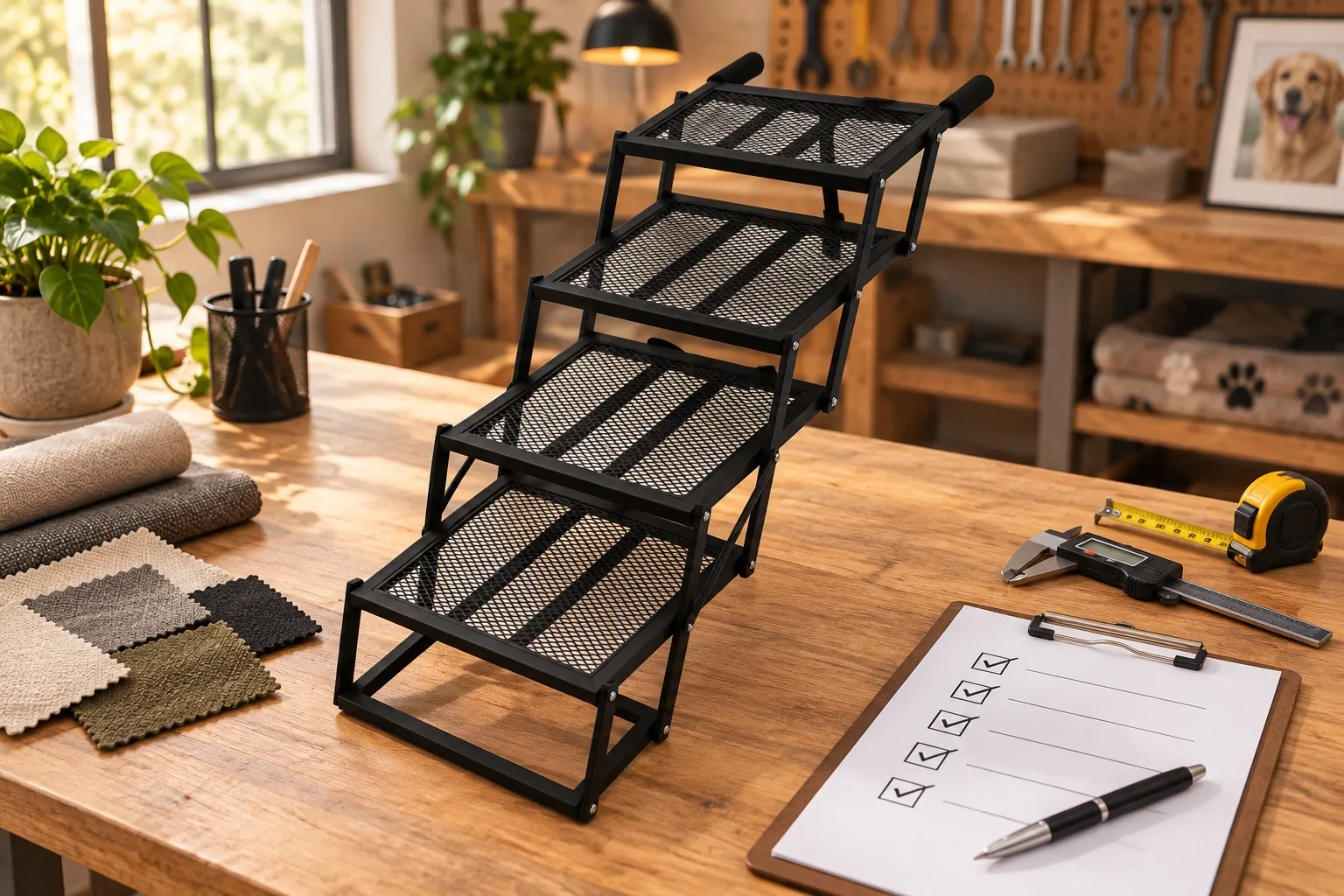
المنحدرات والسلالم: سطح الفشل هو الثبات
- اختبار حمل عند منتصف المدى: تفشل المنحدرات في المنتصف، لا في الأطراف. حمّل 1.5× السعة المُصنّفة عند نقطة المنتصف؛ القبول هو عدم وجود انحناء دائم.
- انزلاق السطح: نفّذ اختباراً مكافئاً لمخلب جاف (وسادة مطاطية) على سطح المشي بزاوية الميل القصوى؛ يجب أن يقاوم السطح الانزلاق تحت الضغط النزولي.
- اختبار دورة المفصلة: اطوِ وفك 50 دورة؛ يجب ألا تظهر المفاصل أي تصدّع وتغلق إيجابياً عند المدى الكامل.
- تشطيب الحواف: كل الحواف دائرية أو مغطاة — تكتشف مخالب الحيوانات الحواف الحادة قبل أصحابها، وتكتشف المراجعات ذلك قبلهم.
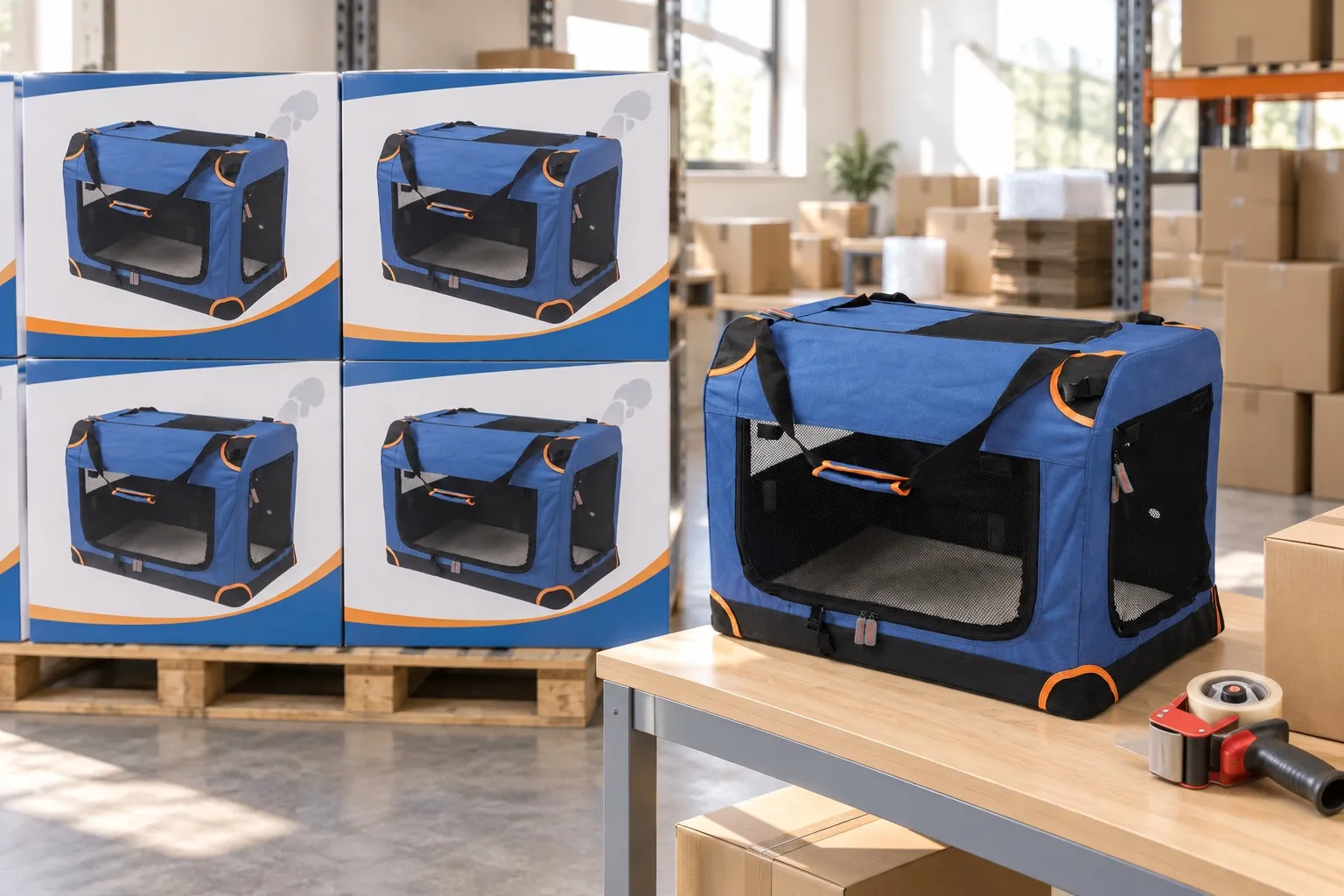
الصناديق الناعمة: الخياطة والسحابات تتحمل الحمل
- كثافة الغرز: حد أدنى 5-7 غرز لكل سنتيمتر على درزات الحمل؛ مستقيمة، بلا غرز متخطاة، وغرز تعزيز عند كل نقطة إجهاد.
- دورة السحاب: 100 دورة فتح/إغلاق مع السحاب تحت توتر خفيف؛ يجب أن تبقى العربات ملحقة وألا تنفصل الأسنان.
- إجهاد الهيكل: اطوِ، وحزم، وفك 20 دورة — يجب أن يُجمَّع الهيكل بشكل متطابق في المحاولة العشرين.
- سلامة الشبكة: 1×1 Textilene أو مكافئ، بلا انحرافات في النسق، ومثبَّت بإحكام على كل الحواف (لوحة شبكية تنفصل عند زاوية واحدة ستفشل في النقل).
الخيام ومنتجات المظلة: الطقس هو الاختبار
- نسيج المظلة: 190T taffeta أو أفضل مع طلاء مقاوم للماء مُصرّح به؛ تحقق من شريط التماس أو التماسات المغلقة على لوحة السقف.
- اختبار العمود: عمدان ألياف زجاجية منحنية لزاوية الإدخال 30 مرة؛ بلا ابيضاض (تصدّع الألياف) عند الانحناء.
- وقت التجميع: يجب أن يجمّع مستخدم جديد خلال الوقت المذكور على تغليفك — توقيته بثلاثة أشخاص مختلفين.
- سلوك الرياح: نقاط التثبيت معززة؛ ونقاط التوجيه مُختبرة بسحب 15kg دون تمزق النسيج عند الملحق.
فحوصات شاملة عبر جميع منتجات الحيوانات الأليفة
- الامتثال الكيميائي: يجب أن تلبي المواد معيار REACH للاتحاد الأوروبي وCA Prop 65 لكاليفورنيا؛ يجب أن تكون التقارير قابلة للتتبع لدفعات المواد، لا لعائلات المنتجات فقط.
- فحص الرائحة: رائحة كيميائية قوية خارج الصندوق مولّد للمرتجعات؛ يجب أن تكون المنتجات المهوّاة محايدة خلال 48 ساعة.
- إسقاط التغليف: كراتين محزومة تُسقط على زاوية واحدة، وحافة واحدة، ووجه واحد من ارتفاع 80cm؛ يجب أن تنجو المحتويات مع ضرر تغليف تجميلي فقط.
- دقة الملصق: اختبار مسح الرمز الشريطي على كل كرتون؛ ملصقات GS1 الخاطئة هي أغلى خطأ تافه في البيع بالتجزئة.
- أخذ عينات AQL: للطلبات الضخمة، افحص وفق AQL 2.5 major / 4.0 minor بدلاً من فحص كل شيء أو لا شيء.
- تقرير مصوّر قبل الشحن: الكراتين المعبأة، وملصقات الباركود، وعينة من البضاعة الجاهزة تُصوَّر وتُؤرشف قبل تحرك رصيد الدفع — الدليل الذي يعتمد عليه محفّز الدفع وأي مطالبة لاحقة.
كيف تجعل المصانع تهتم
أرفق قائمة التحقق هذه بأمر الشراء وارجع إليها في مرحلة الفحص: تصبح معايير القبول في أمر الشراء تعريفاً لـ «العيب» أثناء الفحص، وهذا ما يجعل لحظة دفع الرصيد موضوعية. المصانع ذات أنظمة مراقبة الجودة الحقيقية — فحوصات المواد الواردة، والفحص أثناء العملية، والفحص قبل الشحن — سترحب بالوضوح؛ فعملياتها تنتج بالفعل هذه السجلات. أما المصانع التي تتراجع فهي بذلك تصف قدرتها الحقيقية.
معايير الجودة هي أيضاً أداة تموضع: نفس السرير الذي هو «سرير رخيص» يصبح «سريراً مُختبَر الحمل وجاهزاً للامتثال» اللحظة التي تُوثَّق فيها المعايير — وهذا الفرق تماماً ما يكافئه مشترو التجزئة والمنصات. لرؤية كيف نوثّق المواصفات لكل موديل، تصفح خطوط الخيام والصناديق حيث تُنشر بيانات التحزيم والتصنيفات على الصفحة.